
If hip pain doesn’t let you sleep at night or go shopping in the morning, you may be one of those hip arthritis patients who need total hip replacement surgery to live a happy life.
Hip replacement surgery, also known as total hip arthroplasty, is a common operation that involves replacing a damaged, worn or diseased hip with an artificial joint.
Most modern hip joints last for more than 15 years, which means you will have a pain-free hip for more than 15 years after a successful hip replacement surgery.
As you know, the hip joint is a ball-and-socket type joint. In this surgery damaged joint is replaced with an artificial ball and socket. The artificial ball may be of metal and ceramic, whereas the socket is always made of plastic.
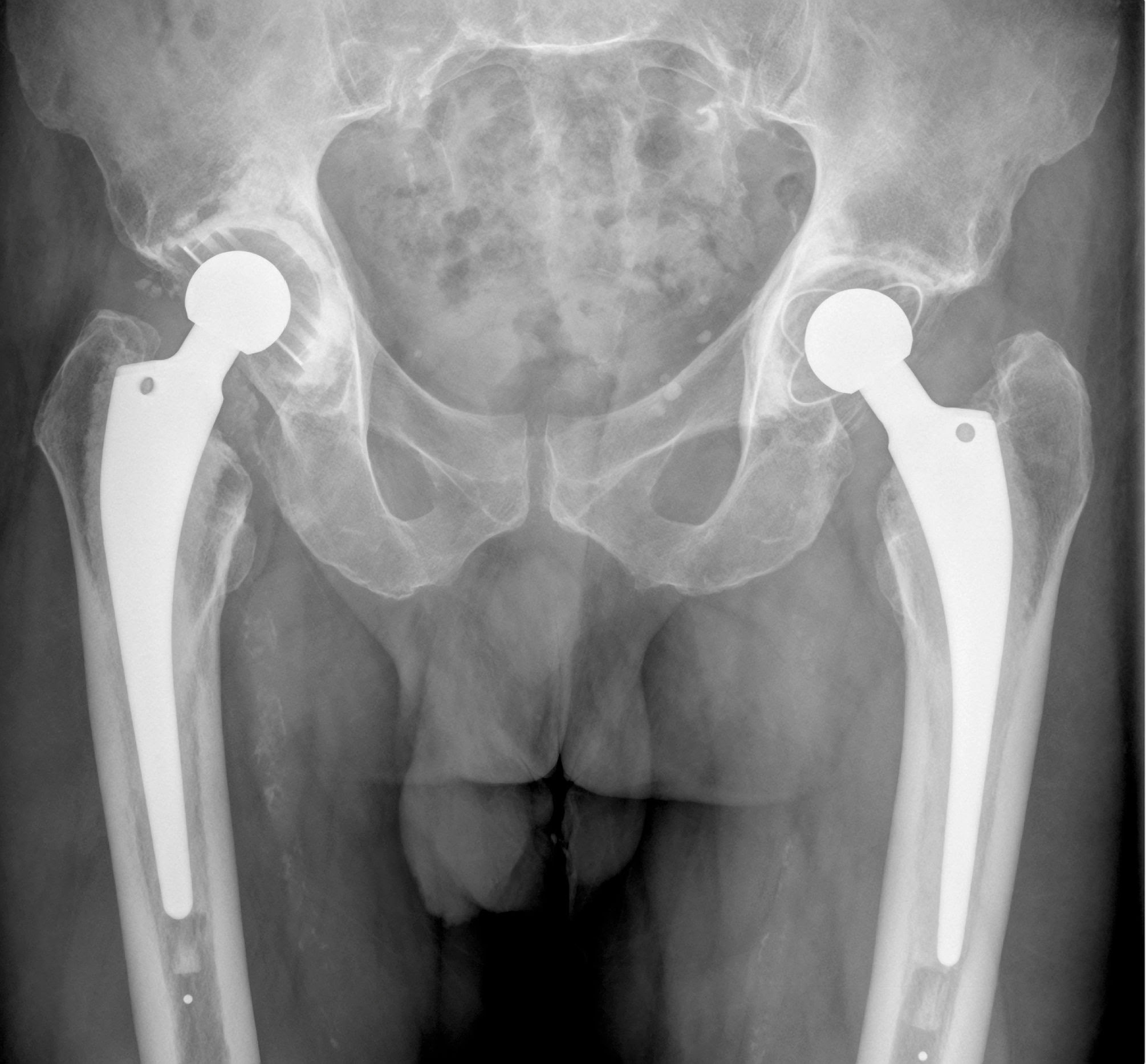
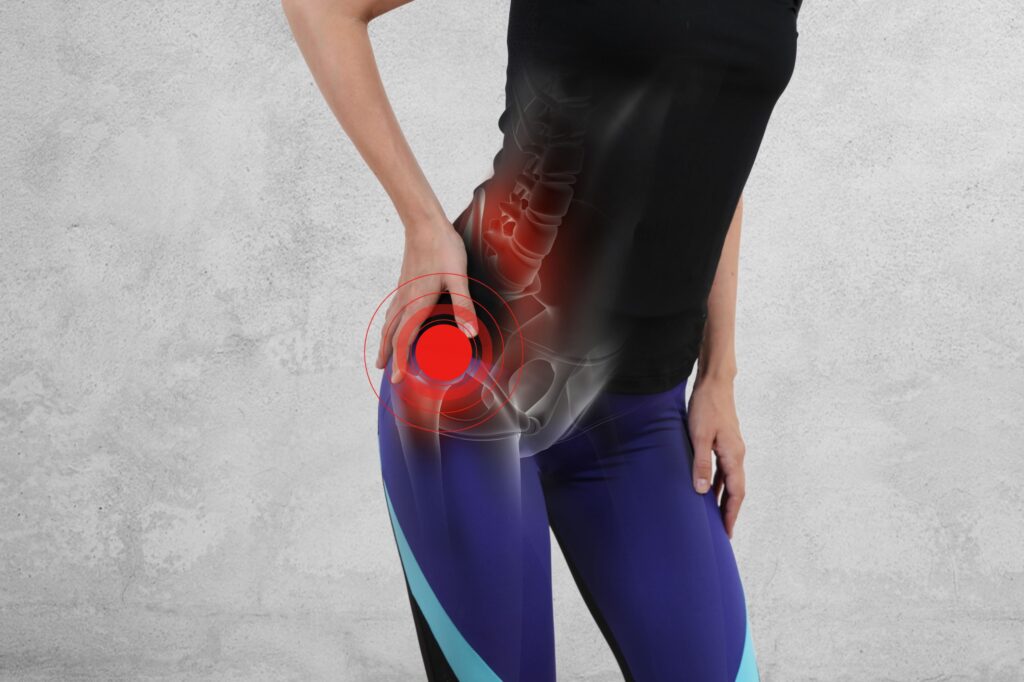
The most common reason for Hip replacement surgery is osteoarthritis. Osteoarthritis is age-related degeneration of the hip joint, wear and tear of joint cartilage and irregularity of the joint surface.
Other conditions that can cause hip joint damage include;
When all other treatments, such as painkiller tablets, physiotherapy or steroid injections, have not helped reduce pain or improve mobility. Ortho Clinic may offered hip replacement surgery if your Hip pain is so severe that it interferes with your quality of life, activities of daily living and sleep.
A Cemented Total Hip Replacement (THR) is a time-tested surgical procedure designed to alleviate debilitating hip pain and restore mobility, primarily in patients suffering from severe arthritis, such as osteoarthritis or rheumatoid arthritis. This technique is distinguished by its method of fixation: the prosthetic components are secured to the natural, or native, bone using a specialized substance known as bone cement (Polymethyl methacrylate or PMMA).

An Uncemented Total Hip Replacement (THR), also known as biological fixation, is a sophisticated surgical technique utilized to replace a damaged hip joint without the use of bone cement (Polymethyl methacrylate or PMMA). This procedure is increasingly favored for younger, more active patients with good bone quality.In an uncemented THR, the fixation relies entirely on the body’s natural healing process: osseointegration.
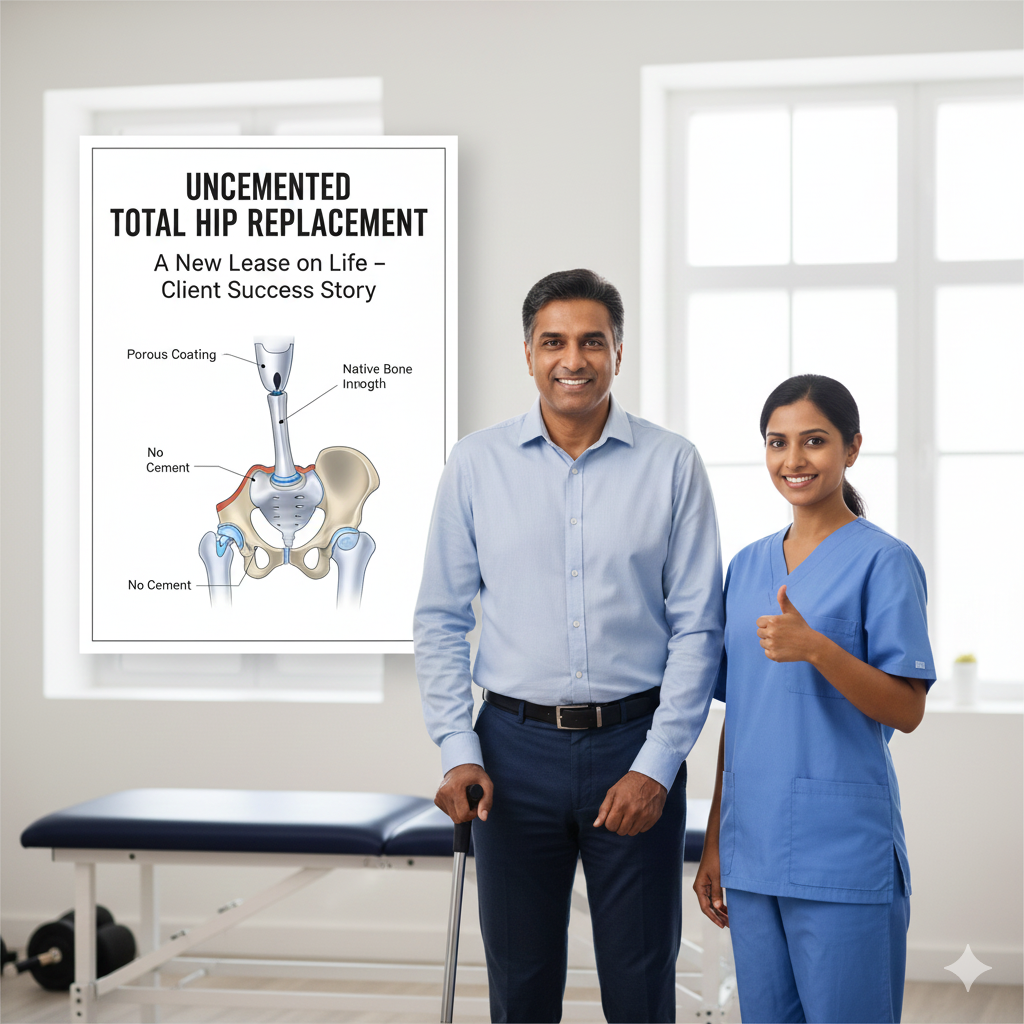
There are other options available as well, in which a combination of cemented and uncemented components may be used, known as hybrid or reverse hybrid.
Normally doctor suggests hip replacement surgery only when all non-operative measures have failed. So, you will require this surgery for relief of your symptoms and to perform your day-to-day activities. Understandably, you might be reluctant to undergo surgery, so there are other types of surgery which may provide pain relief in selected patients, but the results are often not as good in the long term. The following options may be considered. Joint injections Osteotomy – the surgeon cuts the bone and realigns it so that your weight is no longer carried by the damaged part of the hip. This option may be considered only in younger patients with bone deformities Hip Resurfacing–This procedure has been done with limited evidence of success, in which only the surface of the ball is replaced. Joint fusion and arthroscopic surgery may also be considered in selected patients
Before you go to the hospital, find out as much as you can about what’s involved in your operation. Watch animation videos, read blogs, so that you exactly know what happens during the operation. Stay as active as you can. Strengthening the muscles around your hip will aid your recovery. Continue doing gentle exercise, such as walking and swimming. You will see a physiotherapist, who will give you tips and guide you about helpful exercises.
The worn ends of the femur and acetabulum are removed (ball is removed in whole but only the surface of the socket is removed) and replaced with an artificial implant. Artificial joint components will be fixed with bone, and the wound will be closed.
Hip replacement surgery is a common and successful operation in more than 90% of patients. Most people do not have complications. However, as with any operation, there are risks associated with this wonderful procedure. Complications are rare but can include: stiffness of the hip infection of the wound infection of the joint replacement, needing further surgery unexpected bleeding into the hip joint deep vein thrombosis (DVT) persistent pain in the hip a break in the bone around the hip replacement during or after the operation ligament, artery or nerve damage in the area around the hip joint In some cases, the new hip joint may not be completely stable and further surgery may be needed to correct it. Two important post-surgery complications which should always be kept in mind are joint dislocation and leg length discrepancy.
You will be discharged 24-72 hours after surgery and may see your doctor at 2 weeks for stitch removal. After that, your doctor will plan your visits at regular intervals. You may need to see your doctor earlier than your planned visit if you develop any of the following worrisome features: leg/calf swelling (deep vein thrombosis), chest pain or breathlessness (pulmonary embolism). If you develop a fever or feel unwell, the hip becomes hot, red, or if discharge is coming from the wound, it could be due to infection. These are the most alarming features which should never be ignored and need urgent medical advice.
Once you’re able to be discharged, your hospital will give you advice about looking after your hip at home. You’ll need to use a frame or crutches at first, and a physiotherapist will teach you exercises to help strengthen your hip. Most people can stop using walking aids around 6 weeks after surgery, and start driving after 6 to 8 weeks. Full recovery can take up to 2 years as scar tissue heals and your muscles are restored by exercise. A very small number of people will continue to have some pain after 2 years.
Find the top orthopedic clinic in Pakistan for comprehensive care. Expert treatments for bone, joint & muscle issues. Visit us for trusted solutions.